January 27, 2026
Retail entertainment trends 2026: Active play is the new anchor
Revenue generation
Mixed reality
ValoPark
Learn more about ValoPark
Contact

As e‑commerce and mobile shopping continue to capture more convenience‑driven purchases, physical malls are shifting from places to buy into areas to be. This transformation has put retail entertainment at the center of mall strategy.
Read also: Is active indoor entertainment ready for shopping malls?
Converting physical stores to experiential retail
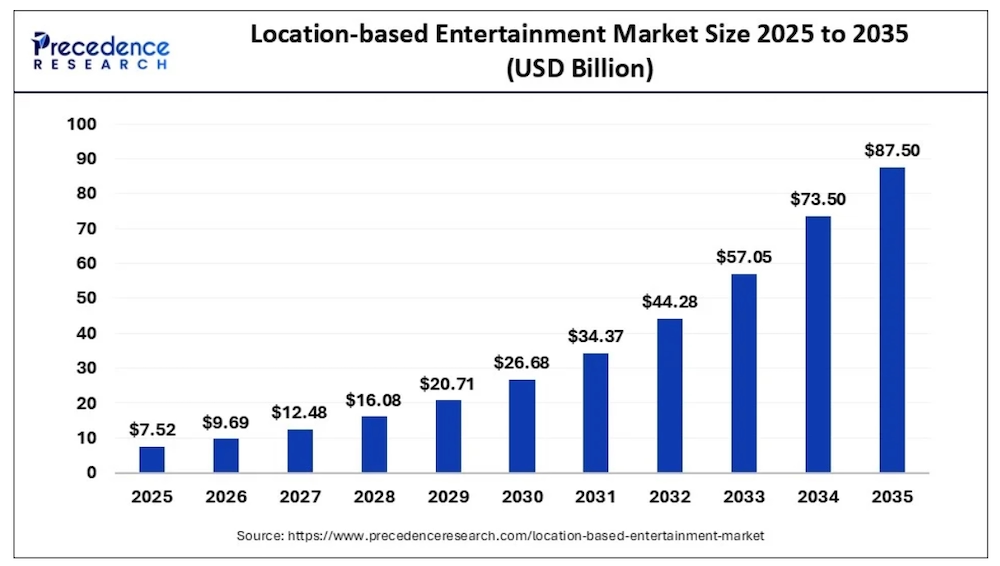
Global location-based entertainment (LBE) is projected to reach USD 73.5 billion by 2035, outpacing many traditional retail categories. The $132 billion experiential retail market is projected to more than quadruple by 2035 as brands and landlords invest in immersive experiences, which are a primary driver of that growth as consumers seek experiences they cannot get at home.
For shopping mall owners, active entertainment is becoming one of the few categories that:
- Drives repeat visitation
- Attracts families and multi-generational groups
- Cannot be replicated online or at home
The traditional retail anchor is being redefined
The retail real estate sector is actively seeking entertainment anchors to drive footfall. "Retailtainment" blends retail and entertainment to deliver immersive, engaging experiences that elevate shopping beyond transactions. Through features like live events, themed zones, gamification, and mixed-reality attractions, it transforms stores, malls, or mixed-use sites into must-visit destinations.
Underneath retailtainment are concrete metrics: foot traffic, dwell time, capture rate, and repeat visitation. In retail, even a few extra minutes of dwell time correlates with higher spend; recent analytics show dwell times around 30–37 minutes in top big‑box retailers in the USA.
When integrated into a shopping mall entertainment strategy, an indoor activity park can support both weekday local traffic and weekend regional draws. To ensure shopping mall entertainment investments deliver, owners and asset managers need hard numbers that tie back to retail performance.
Why retailtainment works?
Retailtainment succeeds by turning routine shopping into memorable, shareable experiences that drive loyalty and revenue.
- Builds emotional connections: It elevates shopping beyond transactions, creating shared memories through joyful group play in full-body movement arenas or augmented climbing challenges. This fosters deeper brand loyalty and sparks organic word-of-mouth promotion.
- Extends dwell time: Visitors linger longer when engaged with dynamic game zones and interactive setups, offering more chances for impulse buys and cross-category spending across the mall.
- Fuels social media buzz: Built-in video capture of real players in action prompts instant sharing of highlight reels, amplifying reach especially among younger demographics who prioritise experiences over products.
- Counters e-commerce limits: Physical venues excel at tactile, communal moments, like group competitions that online retail cannot match, securing malls' edge in the experience economy.
Key metrics to track include:
- Foot traffic: capture rate and cross‑shop: What percentage of entertainment guests also spend in other mall categories, and how does this compare to average visitors?
- Dwell time and repeat visits: How much longer do visitors who engage with the entertainment zone stay in the center, and what is the return‑visit rate over 6–12 months?
Key metrics for Location Based Entertainment (LBE) operators in retail include:
1. Revenue:
- Revenue generation across core streams like pay-to-play or gated admission, plus higher-value add-ons such as birthday parties, group events, and food-and-beverage.
- Revenue per square foot/meter: Measures total income divided by leased space. Benchmark $120–$200 per square foot ($1,300–$2,150 /m2) per year for high-performing FECs.
- Capture rate: Percentage of mall visitors who engage with the entertainment zone and spend.
2. Operations:
- Utilization rate: Percentage of operating hours at full or near-full capacity; aim for 70–85% in family-driven malls.
- Average dwell time: Time spent per guest; 20–45 minutes signals strong repeat-play potential.
- Peak hours/days: Knowing when your venue is busiest helps optimize staffing, manage inventory, and time marketing efforts effectively
3. Staff cost:
- Revenue per staff hour: Total revenue divided by paid staff hours, while prioritising fully or semi‑automated attractions that run with low staffing.
- Staff-to-guest ratio: Guests managed per active staff member
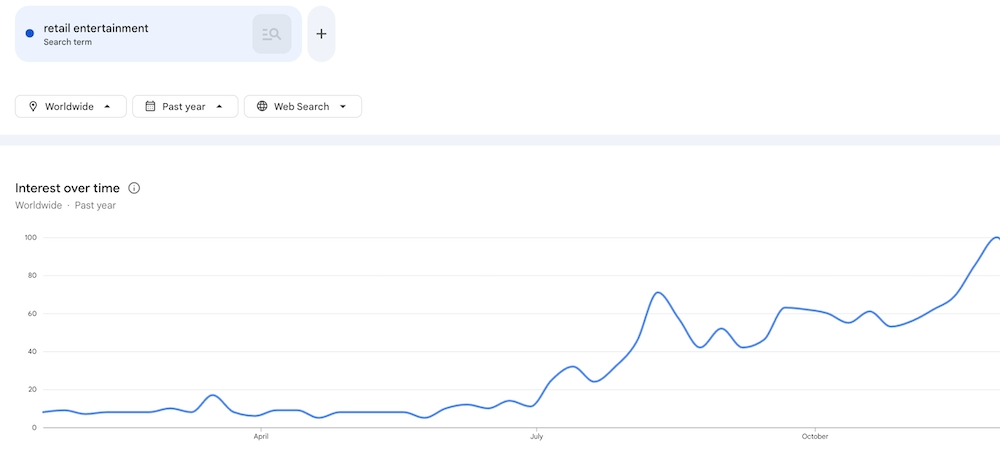
Mall entertainment works for kids, families, groups, and adults
Parents searching online for “Are there good retail entertainment options for kids inside XY shopping mall?” are really asking if the mall feels safe, stimulating, and worth the trip. For operators, that translates into specific design choices across attractions, staffing, and guest journey.
Effective mall entertainment is active: families increasingly prefer options where kids move, climb, jump, and play together instead of only sitting in a cinema or on their phones. Active indoor entertainment and mixed‑reality game zones answer this need while remaining weather‑proof and operational year‑round.
Retail amusement is social by design. Attractions tuned for small groups (2–6 players) and family play tend to outperform purely solo experiences, both in satisfaction and in organic marketing via photos and videos shared on social media.
Interactive mall entertainment also draws in adults over 21+, particularly for evening visits and group outings like girls’ nights out, birthday celebrations, or office team-building events.
Read: How play value impacts your digital attraction's real ROI
Retailtainment example: ValoPark - space-efficient mall entertainment
One of the biggest operational questions is how to bring amusement‑park‑level appeal into existing retail venues that have low ceiling heights, complex columns, and fragmented units.
New‑generation LBE and interactive mall entertainment concepts are space-efficient and designed to fit into footprints starting at a few thousand square feet, making them viable for small retail properties and underused wings of a mall.
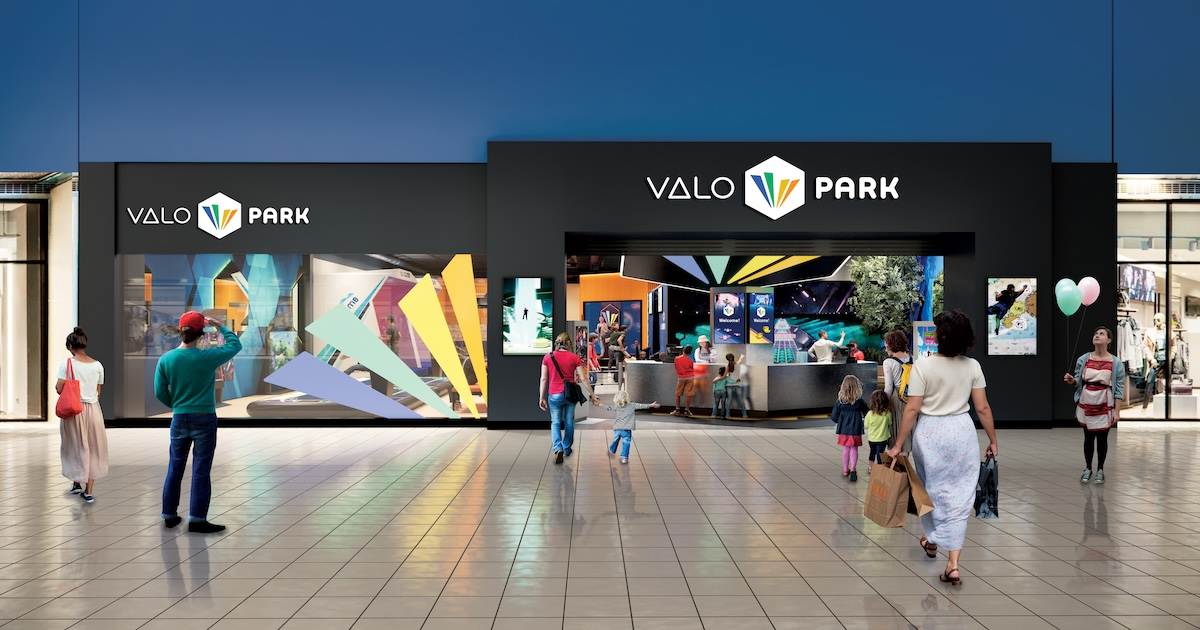
Mixed‑reality and screen‑based attractions can operate effectively with low ceiling heights, a critical threshold for many older malls that cannot accommodate large rides. Valo Motion’s ValoPark, a compact active indoor entertainment park concept for retail with a small modular footprint of just 4,500 sqft/400 m2 and a low‑ceiling height requirement (12 ft/3,5 m), combines Valo Motion’s mixed‑reality attractions ValoArena, ValoClimb, and ValoJump into a unified mall game zone.
ValoPark’s open layout allows gameplay to be clearly seen from outside the attractions, helping draw foot traffic from the mall while supporting efficient, automated operations, with as few as 2–4 staff members, and accommodating parties and group events.
Does ValoPark work? With its second ValoPark-inspired venue now open, Total Ninja Interactive demonstrates how the model can succeed across different markets, offering high repeat customer engagement, low operating costs, and a guest experience tailored for today’s digital-native audience. Read also: ValoPark concept comes to life in Total Ninja Dubai
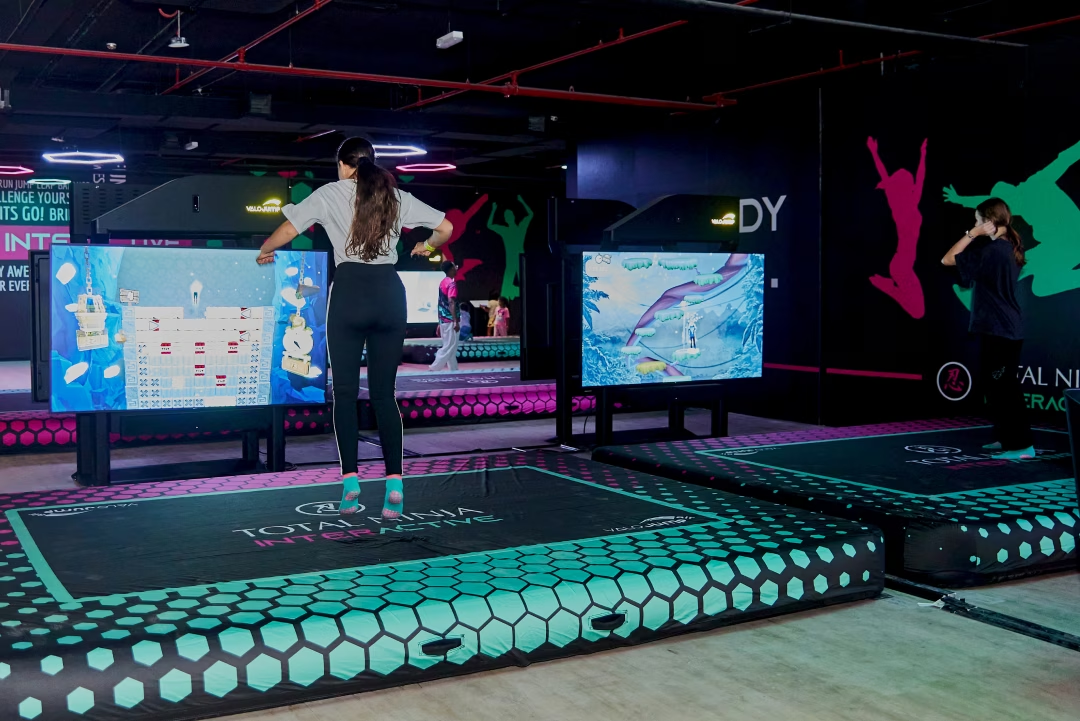
Regional differences in the retail entertainment opportunity
United States and Western Europe: Repositioning and differentiation
In the U.S. and much of Western Europe, the opportunity for mall operators is not rapid footprint growth, but strategic repositioning, helping malls transform from transactional retail centres into experience-led destinations.
How LBE operators can succeed:
- For LBE operators accustomed to destination venues outside cities, success in retail requires a mindset shift. Mall-based entertainment is not only about occasional, planned visits; it is also about capturing spontaneous foot traffic, repeat local customers, group parties, and dwell-time play with high-throughput entertainment concepts.
- Design for visibility and impulse entry. Attractions must be open, eye-catching, and immediately understandable to convert mall foot traffic into players.
- Be modular and flexible. Many opportunities exist in former anchor spaces or underused wings, where adaptable footprints and phased rollouts reduce risk for both operator and landlord.
- Maintain tight operational efficiency in high-cost labor markets. Automated attractions, self-service payment, and integrated booking systems allow operators to run compact entertainment zones with minimal staff.
APAC and LATAM: Keeping pace with rapidly rising expectations
Across APAC, entertainment is already a core component of the shopping mall experience. Consumers are accustomed to high-quality, visually impressive attractions, and malls compete aggressively on experience rather than convenience alone. In Latin America, shopping centers and brands shift from simply selling products to offering immersive, memorable experiences to attract foot traffic.
How LBE operators can succeed:
- For LBE operators entering retail here, the challenge is not introducing entertainment, but meeting and sustaining high expectations in highly competitive environments.
- Experiences must look exciting from afar and translate well into photos and short videos shared on social media.
- Design for group and social play. Attractions that work for friends, couples, and families outperform solo experiences.
- Refresh content regularly. Static attractions lose appeal quickly; operators need update cycles that keep the experience feeling new without major hardware changes.
MEA: Scaling entertainment with purpose
In MENA, the retail entertainment opportunity is defined by scale, ambition, and strong public- and private-sector investment. Large regional and super-regional malls are often positioned as destination venues for both residents and tourists, with entertainment playing a central role.
How LBE operators can succeed:
- For LBE operators, the opportunity is substantial, but so is the expectation for quality, throughput, and operational reliability.
- Balance flagship and everyday attractions. Iconic, headline-grabbing experiences should be complemented by compact, repeatable concepts that serve local families year-round.
- Plan for high capacity and peak demand. Weekend and holiday traffic can be intense; queue management and throughput matter as much as spectacle.
- Support multi-generational audiences. Successful concepts appeal simultaneously to kids, teens, parents, and group celebrations.
Read:The second ValoPark-inspired Total Ninja Interactive opens in South Africa
Active entertainment as core mall infrastructure
Interactive, space-efficient entertainment concepts are helping malls transition from transactional venues into experience-driven destinations.
For location-based entertainment operators, this evolution creates a more stable and strategic role within the mall ecosystem. Entertainment that is treated as essential infrastructure is less exposed to seasonal experimentation and short-term leasing cycles, enabling operators to plan for longer horizons, optimize operations, and build repeat audiences rather than relying on novelty-driven spikes.